
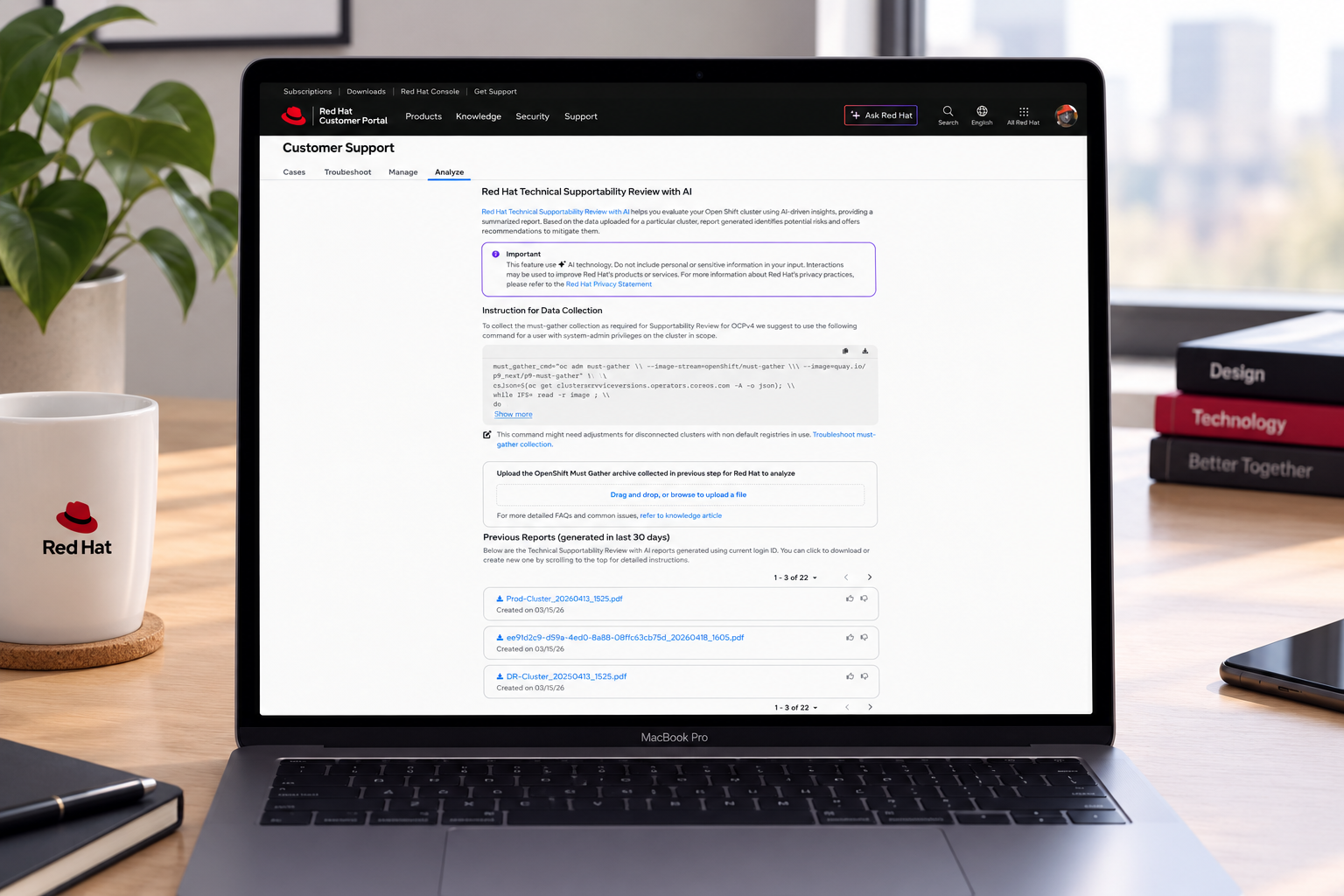
AISURE (Red Hat Technical Supportability Review with AI)

AISURE Link: https://access.redhat.com/support/cases/#/analyze (need a RH account)
Target users: External users with access to PCM
Users need support with an assisted supportability review for a specific file or may have a related question that can be addressed with AI assistance.
The Problem
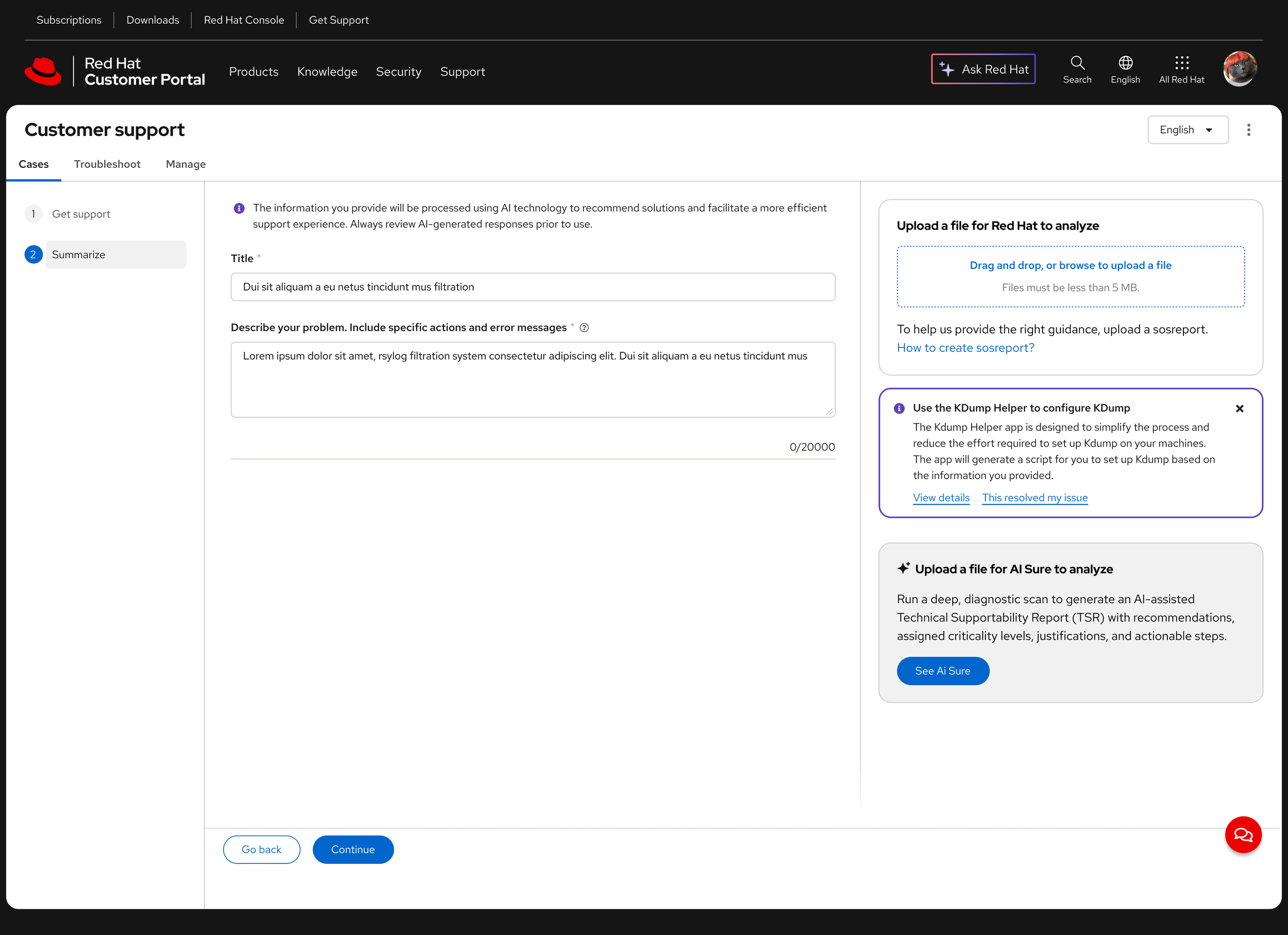
We wanted to create a centralized starting point where users could easily choose how they wanted to get support. The page presents four AI-powered options:
Ask Red Hat — Get answers to questions or determine whether further support is needed.
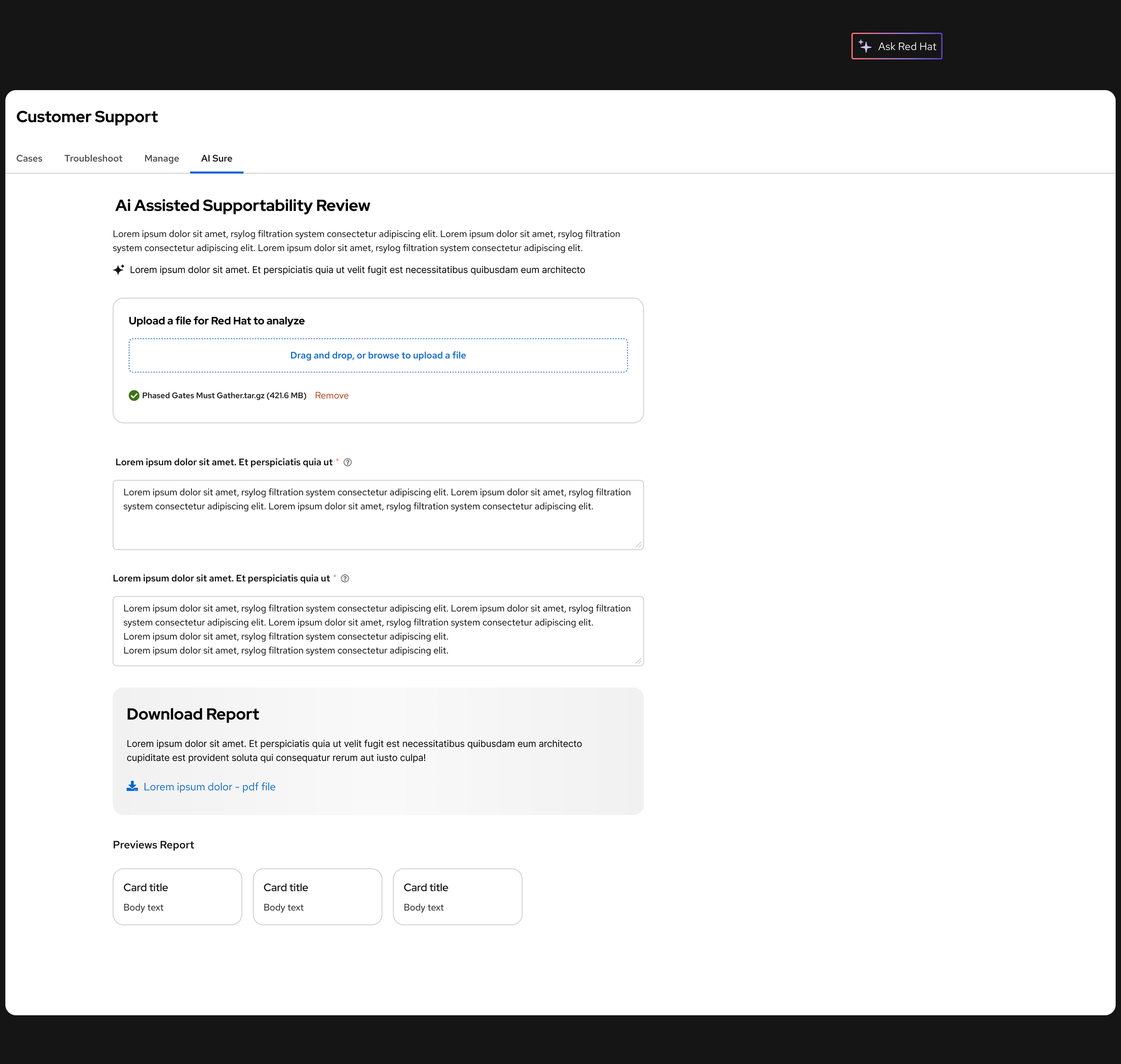
Upload a File — Submit a file for an assisted supportability review.
Access PCM — Start a new case or troubleshoot an existing issue.
File History — View previously uploaded files and their review history.
My Role
I collaborated with Product, Engineering, and key stakeholders to design a centralized compliance information experience.
To help align on the vision and better understand stakeholder expectations, I reviewed and built upon initial wireframes created by developers. These early concepts helped us visualize the desired experience and provided a starting point for exploring the final design.
Research & Framing
I reviewed the initial Engineering wireframes and spoke with Product, Engineering, and key stakeholders to understand how developers choose between asking a question, uploading a file, or opening a support case.
The research revealed that the experience needed to guide users to the right path, not simply present support options. A key point of confusion was the OpenShift cluster uploader and how it differed from PCM’s existing file-upload experience. Unlike a general file upload, the OpenShift uploader enables deeper cluster analysis and generates an actionable report.
This shaped the direction of the experience: make the purpose, differences, and expected outcomes clear from the start. I also approached the workflow with the understanding that, while built within the Customer Portal, the experience needed to support a more console-like, layered interaction model.
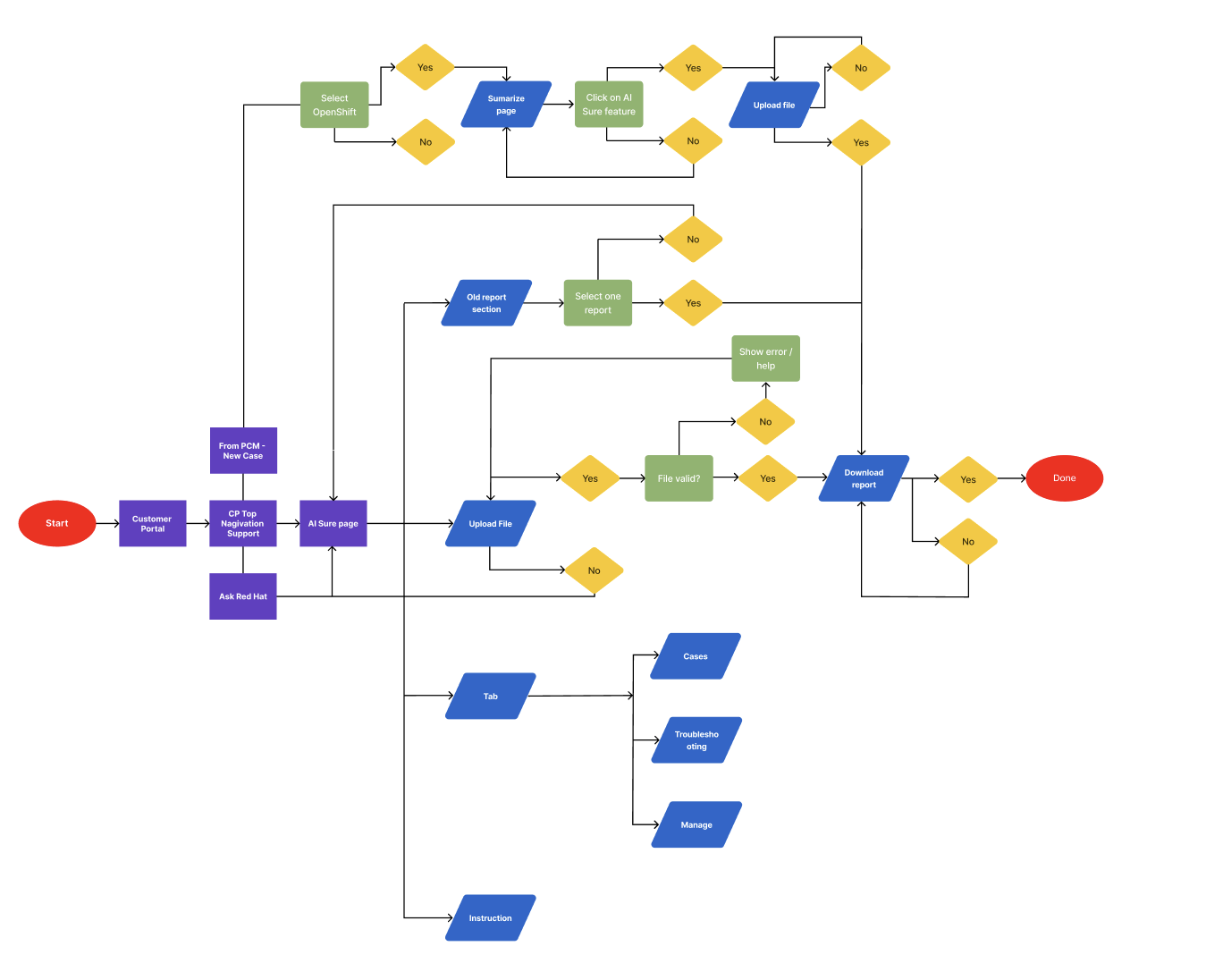
Once I had a clearer understanding of the workflow and its key sections, I started sketching different ideas and exploring how the experience could come together.
Final Design
I structured the experience as a clear, step-by-step journey following the sketch I showed on the left:
Understand: Introduce the page, its purpose, and how AI is used.
Prepare: Provide data collection instructions in a code block.
Upload: Guide users through uploading their OpenShift cluster data.
Review: Show previews of generated reports so users know what to expect.
The experience focused on two main stages, with close collaboration with developers and PCM stakeholders to understand technical constraints and possibilities.
1. Analyze the upload
Users upload their OpenShift cluster data for analysis.
A progress indicator communicates that the process can take up to 10 minutes.
During the upload and analysis, users are warned that leaving the page could interrupt the process.
Once the upload is complete, users can leave the page.
A toast notification and updates across PCM let users know when the analysis is ready.
The Preview Reports section shows the report’s progress through different states and icons.
2. Generate the report
After analysis, users can start generating the final report.
The report progresses through different states before becoming available to download.
The final report can then be downloaded once ready.
I worked closely with developers and PCM stakeholders throughout the process to understand the platform’s capabilities, constraints, and what could realistically be implemented.